
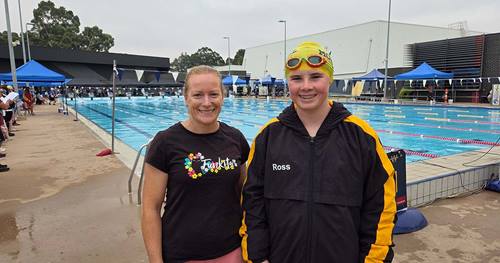
When Fiona moved her 13yo son Ryan to the country, she hoped a fresh start would help him settle. Instead, the bullying at school was relentless, and the impact followed them back to Gippsland.
“He went from being very kind, very open, very loving child to just being angry,” Fiona said. “There was no confidence, there was no self-esteem.”
Fiona describes a “history of domestic violence” in the family. By the time Ryan started Year 7, his anger had become his armour. “Anytime he was confronted, he retaliated straight away,” she said. In the first half of the year, he was suspended repeatedly, and the things he enjoyed at school were “taken away from him”.
What Fiona struggled to find was support that fit the gap between early childhood services and programs aimed at older teens. “There was nothing targeting that age group,” she said. “I just latched onto it and hoped he could get in.”
That “it” was the Bluelight Positive Pathways program, a partnership between Blue Light Victoria and Gippsland Regional Aquatic Centre (GRAC). The free, eight-week program pairs participants with a personal trainer and a mentor from Victoria Police or emergency services, combining structured fitness sessions with goal-setting and steady adult support.
For the team at GRAC, the point is simple: the centre can be a place where young people feel safe, seen and supported.
“We want young people to feel welcome here. To know this is a safe place where people believe in them said Tess Poole, YMCA Victoria’s Community Programs Officer at GRAC.
“It starts with fitness, but it’s really about confidence, trust, and belonging.”
Blue Light Victoria Program Manager Rosy Jolic said the Latrobe program was shaped by a model that began in Bendigo, designed for young people starting to disengage from school or beginning to come to the attention of police.
For Fiona, the turning point was the mix of routine and relationships, and the chance for Ryan to spend time around positive adults. “Having one male role model in his life that was a positive person and had positive messages for him was just fantastic,” she said.
She noticed changes quickly. At school, a classmate told Ryan she used to avoid him because “he was so angry all the time”, but now he seemed “calm and settled”. Teachers, Fiona said, were reporting the same shift.
At home, the biggest moment came unexpectedly. “Four or five weeks into the programme, he said, ‘Mum, I haven’t actually put myself down at all, like in the last month.’”
Ryan has now finished the eight-week block, and Fiona says he was “very disappointed” when he realised it was the final session. “I want to keep coming,” he told her.
That is now the focus for Fiona and the GRAC team: keeping the momentum going after the formal Bluelight program has ended. The broader program model includes the option for participants to continue with drop-in fitness sessions after the initial eight weeks. At GRAC, the aim is to help Ryan keep building habits using the facility and the routines he has already started, even without the formal Bluelight structure.
“He was getting a lot out of it,” Fiona said. “It was seeing the kid that I could see through, what other people could start seeing now.”